About Me

My photo
We are known as PaWingers or just The Wingers by our Geocaching friends. When we found our first cache we had to come up with a name to log the find. We came up with this name simply because of residing in Pa. and because one of our many passions is cruising this beautiful country on our Honda Goldwing. Aside from geocaching we are passionate about most anything outdoors including hiking, kayaking, snowmobiling and biking. We are blessed beyond words with a wonderful son and daughter in law. We're also blessed with some terriffic family and friends. We consider ourselves very fortunate due to the fact that after being married over 40 years we still enjoy these things together.

Saturday, June 13, 2015

Gotta Love Hooters!

Okay, I know some of you sicko's clicked on this link figuring you were going to see something other than Owls.  I know you are disappointed and might be a bit upset with me and feel you were tricked.  I would like to apologize for this but probably won't.  Actually it was a cheap trick because not every Owl will hoot for their vocalizing, in fact few of them do.  They make all different sounds, take for instance the Snowy Owl which will hoot, whistle and hiss.  Then there is the Barred Owl which has a very distinctive call.  It's an 8 or 9 note call and sounds like they are saying, "who cooks for you.......who cooks for you all".  During the mating season they will make a riotous duet of cackles, hoots, caws and gurgles.  Then there is the Great Horned Owl that are hooters but really don't have the "t" at the end.  It's more like, hoo-h’HOO-hoo-hoo! 
A mature will make lots of other sounds  including whistles, barks, shrieks, hisses, coos, and wavering cries.  That will send shivers down your spine on a dark night in the woods.  To the unsuspecting hiker it could possibly cause you to soil your britches.

Over the past 6 months we have had the opportunity to observe and photograph three different species of Owls and in some cases their young ones also.  This has been such an exciting 6 months and we consider ourselves privileged to have this amazing opportunity.  Two of the Owls featured in this post are the Great Horned and the Barred.  These two Owls are residents of our area and while they are commonly heard they are less commonly seen.  The Snowy Owl is by no means a resident of North America but instead calls the Arctic it's home.  The Snowy Owl will at times venture this far south during an event known as an "irruption".  I have discussed this term at great length in a previous post so I promise to not bore you again in that regard.  Instead I will bore you with new ramblings.

Okay, before I scare off the few readers that follow my Blog, I have some good news.  The good news is that this post will be more pictures and less writing.  How's that for good news!  The truth of the matter is that Owls are awesome but they don't juggle, they can't be trained to ride a bike and they can't balance a chair on their chin.  Yes, they are amazing but there isn't a lot I wanted to write about them.  Let's just say they are amazing to photograph but to write about..... not so much.  So here are the Owls I promised.  The first series of pics are of Great Horned Owls, including a mature female and the young owlets.


The images above were taken in early May 2015.  I wanted to include the mature female watching the nest from a distance.  As you can see in my pictures, sometimes she is wide awake and watching with both eyes open.  Then there are other times she closes one eye to take a little rest.  In another picture, you can see that her eyes are closed and she appears to be napping but I bet she's a real light sleeper and keeps constant vigil over the nest.  The last picture shows one of the Owlets looking out of the nest which is the top of a rotted tree.  There are actually two of them in there.
 
 
The picture above was taken in early June and they will be fledging very soon.  Unlike Eagles, Owls will fledge the nest before they are able to fly.  I imagine they kinda' just plop to the ground.  I think they ought to give some thought to doing what the Eagles do as it would be a whole lot safer and probably not hurt as much.


The three pictures above were taken very shortly after one young Owlet fledged the nest.  We missed this even by possibly minutes but no more than two hours.  He's got this look on his face like, "holy crap, that was a rush".  Or possibly, "maybe we should give some thought to learning to fly before we leave the nest".  Or possibly, "okay, now what".  At any rate, he looks nervous about being away from the safety of the nest high up in the tree.  We shot these pics from a considerable distance and they are cropped significantly.  It's important to not stress the critters.
 
The next pictures will be of Barred Owls.  I am only posting a couple pictures because they were taken on two different nights as darkness was approaching.  The first night we found the Momma but didn't locate the nest.  The next night we located the nest but only one of the three babies would pose for a picture.  Unfortunately, by the time we got back into the area again,  the Owls had fledged.  Bummer for sure but we were happy for the opportunity we had to photograph them.  Hope you enjoy!

 
Here's the little baby Barred Owl that I had promised to show.
 
Last but not least, here are a couple Snowy Owls that visited Gull Point for awhile.  I had previously written a post on Snowy Owls so I'm just including a couple recent images taken this winter.


Hope you enjoyed your time with the Owls and forgot all about the Hooters you had hoped for.


Chaos at the Rookery

Throughout the years of observing wildlife through a lens or a pair of binoculars, we have had the pleasure of learning the habits of many different critters.   It's absolutely amazing to watch them and to note the similarities in their habits but also the differences.  Often as you watch them, you think to yourself,  "well, that's logical behavior".  Other times you just can't make sense of it and wonder how they ever come to adopt this universal behavior among their species.  In this post I will be mainly talking about Great Blue Herons but will also briefly point out how they differ from other birds and mammals.

To get this discussion underway, lets talk about the term used in the title of this post, "rookery".  Many of you may have never heard of the term and quite possibly saw one or more than one, but didn't realize that you just drove by a hotbed of  wildlife activity.  A rookery is colony of nesting animals but generally birds.  Often you may have ridden by a group of trees sitting back from the road and while you did notice a number of nests or piles of sticks scattered among the branches, you just rode on by and gave it no more thought.   Chances are you just passed by a "rookery" which we consider a wonder of nature or maternity ward of the animal kingdom.


In this particular post I will be talking about Heron rookeries but this term is by no means limited to just Great Blue Herons because there are other birds and animals that colonize in their nesting sites.  One thing we have observed over the years is that typically Great Blue Herons will chose a site for their rookery that is difficult to access by humans and is often in a wet swampy area.  One thing for certain, it is always located very close to a wildlife supermarket, which is a stream, river or lake. This is absolutely vital so that they have a steady source of fish and aquatic life to keep themselves nourished during this time of breeding, nesting and feeding the newborns up until the time of fledging.  Fledging is the day that the young Great Blue Herons step to the edge of the nest and start their own life and adventures.
 

I had mentioned that there are similarities and differences in the behavior of animals but motherly love with the young is strong and universal and amazing to observe and photograph.   In my eyes, a rookery is an amazing occurrence in nature.  When you think about so many animals and think about how they have their young, it's so different from the Great Blue Heron.  Think about a deer or bear or even an elk.  In the bird world, look at the Bald Eagle for instance.  All of these just mentioned will pick a secluded spot to have their young and certainly not at all like a colony of Herons.  A Bald Eagle will nest in the trees often in the same spot for many years just as the Herons do but they are alone and not in a rookery environment.  It does seem to be a common occurrence though, where a Bald Eagle will take over a Heron nesting area, and chase the Herons out.  But even when they do this, it's a lone Eagle and not a colony like Herons.  It's interesting to me how the Herons will nest in great numbers and often their nests are only a couple feet away from each other.


Most of the pictures in this post were taken at a rookery out in the Cuyahoga Valley in Ohio.  What's cool about this particular rookery is the fact that it is quite close to a road and very easy to photograph which is quite unusual for a Heron nesting area.  It is my understanding that this rookery has been re-used for a number of years.  Each year the Herons return and either build or rebuild their nest.  Building or rebuilding may take 3 days to a couple weeks.  The Herons fly in with sticks and weave them into a strong nest where they can lay their eggs which can be as few as three or as many as seven or eight.  As you can imagine, the nest can get quite crowded by fledging time. 


As we photographed this nesting area we tried to count the nests but foliage made it difficult.  This one giant Sycamore had at least 40 - 50 nests and each nest appeared to have at least 3 young Herons.  Just this one tree will most likely produce 150 young Great Blue Herons.  Just amazing isn't it!  Now let's rewind to 2003 when there were approximately 176 nests.  Back in 2013 there were 110 nests which produced about 251 young Herons.  In this area this year there are easily 100 plus nests.  It's absolutely amazing to see and to listen to all the vocalizations coming from the nests.  It's equally amazing to photograph and observe the activity in the nests.  Our last trip to this location was early June and the Herons are getting quite large and seemed to be getting tired of sharing the small nests with their brothers and sisters.  This becomes quite evident by their actions as they bite at each other and push each other around in the nest.  Because it is only a few weeks from fledging time they are constantly spreading their wings as they get the feel for the wind trying to give them lift in preparation for their first flight.  Activity in a rookery begins as early as late February - early March and will continue into July.  Depending on when you visit, the activity will continually change.  Early on you will witness the nest construction or re-construction.  Next will be the partnering up and breeding.  After that it will be the laying of the eggs and sitting on them for about 28 days.  After the eggs are hatched, the feeding becomes a steady ritual and will continue until late June to early July when the young Herons fledge the nest.


While I don't really know if it is true, I believe the male and female parent will be a couple for just this nesting period.  It's also been said that the courtship forms in quite an unusual way.  The male Heron will choose a stick for the nest building and present it to the female and this act strengthens the bond between the male and female for that season.  Such is life in the outdoors, one amazing thing after another!  See it for yourself and witness the dynamics of nature as you watch these prehistoric appearing raptors of North America.  You may be surprised at what you see and get hooked on nature such as we are.

Monday, April 7, 2014

Rockland Tunnel

If you happen to be a bicyclist and enjoy a great ride along a beautiful river, you definitely need to check out the Allegheny River Trail.  On a recent ride we started our ride from the trailhead at Emlenton and pedaled upriver toward Franklin.  This is a paved trail through a relatively desolate and unpopulated area other than an occasional small gathering of camps here and there.  Riding this trail will offer you beautiful wooded scenery to the one side and a river view to the other.  So you may wonder if that is all this trail has to offer and I might say, what more do you want!  But there is more and that added bonus would be two awesome train tunnels.  The first tunnel from the Emlenton side would be the Rockland Tunnel.  This tunnel is 2700 feet long and definitely requires a headlight.  I promise you that as you near the center of this tunnel you would not be able to see your own hand in front of your face because it is pitch dark in there.  There is a slight curve in this tunnel which adds to the darkness factor.
 
The Rockland Tunnel was built in 1915 and it's age is definitely showing.  It's very evident that stone and brick occasionally falls to the trail surface and also there are places that you may encounter some running water dripping or maybe running down through the ceiling.  In the winter this water creates some beautiful ice formations.  We rode this trail in early April and the southern end of the tunnel for about 250 feet had a surprising amount of ice blocking the trail.  These ice formations were 2-4 feet high and forced us to pretty much hug the east wall to get around the ice.  Aside from the ice, there was a also a good stream of ice cold water running from the ceiling right onto the center of the trail.  On our return trip from upriver and beyond the Kennerdell Tunnel we passed back through the Rockland Tunnel once again and paused to capture a few photos of this awesome tunnel with the ice formations.

 
In a few weeks this trail will be colored up and shaded by the beautiful colors of summer.
 
Below is a picture of one of the many safety alcoves that are very common in the old tunnels.  These small archways provided a place for workers or hobos to tuck into and be safe from a passing train.  We have been in many old tunnels and this is a very common practice.  These alcoves are staggered from one wall to the opposite wall and a person wouldn't have but a short distance to get to the nearest alcove.  These are large enough for a couple people to seek safety.


Tuesday, March 25, 2014

Capturing the Memories

It's hard to imagine a bad day outdoors.  I've spent countless hours in brutal cold temperatures with driving winds and still called it a great day.  Even rain does little to dampen my spirits.  Now that's not saying that I wouldn't choose a mild day with comfortable temperatures to be outdoors, but I'll take what ever Mother Nature dishes out and still enjoy it.  After all, critters are funny and unpredictable and some of the worst weather days proved to be the most productive for wildlife.  You just never know about critters so if you want to increase the odds of great photographic opportunities, you need to weather the storm, endure the cold and embrace the elements.  It's all about capturing the memories. 
 
The images below are just random shots that I decided to post in my blog so that readers can enjoy the memories that I have captured from the comfort and warmth of their home.  Typically I would have a long story to go with the images I post but that won't be the case this time.  I bet this will make a lot of people quite happy.  The cool thing about wildlife photography is that aside from hopefully going home with a card filled with decent images you also go home with some amazing memories.  Years later you can look at many of your pictures and experience some of the same feelings that you experienced the moment you pressed the shutter and captured the image.  Okay, on to the pictures!


Porky's seem slow and sluggish but don't think for a moment that it's easy to get a decent picture of their face.  Typically when you get close enough to capture their face they will quickly turn with their butts toward you since that is their first line of defense.  Contrary to beliefs, they cannot fling the quills at you and I'm quite thankful for that.


 The three images above were taken mid March 2014.  This mature Bald Eagle was very aware of our presence but did sit still long enough for a few shots.  It was a very windy morning and even though the Eagle was stationary, the branch he was on was bobbing like crazy and therefore required a fast shutter.
 

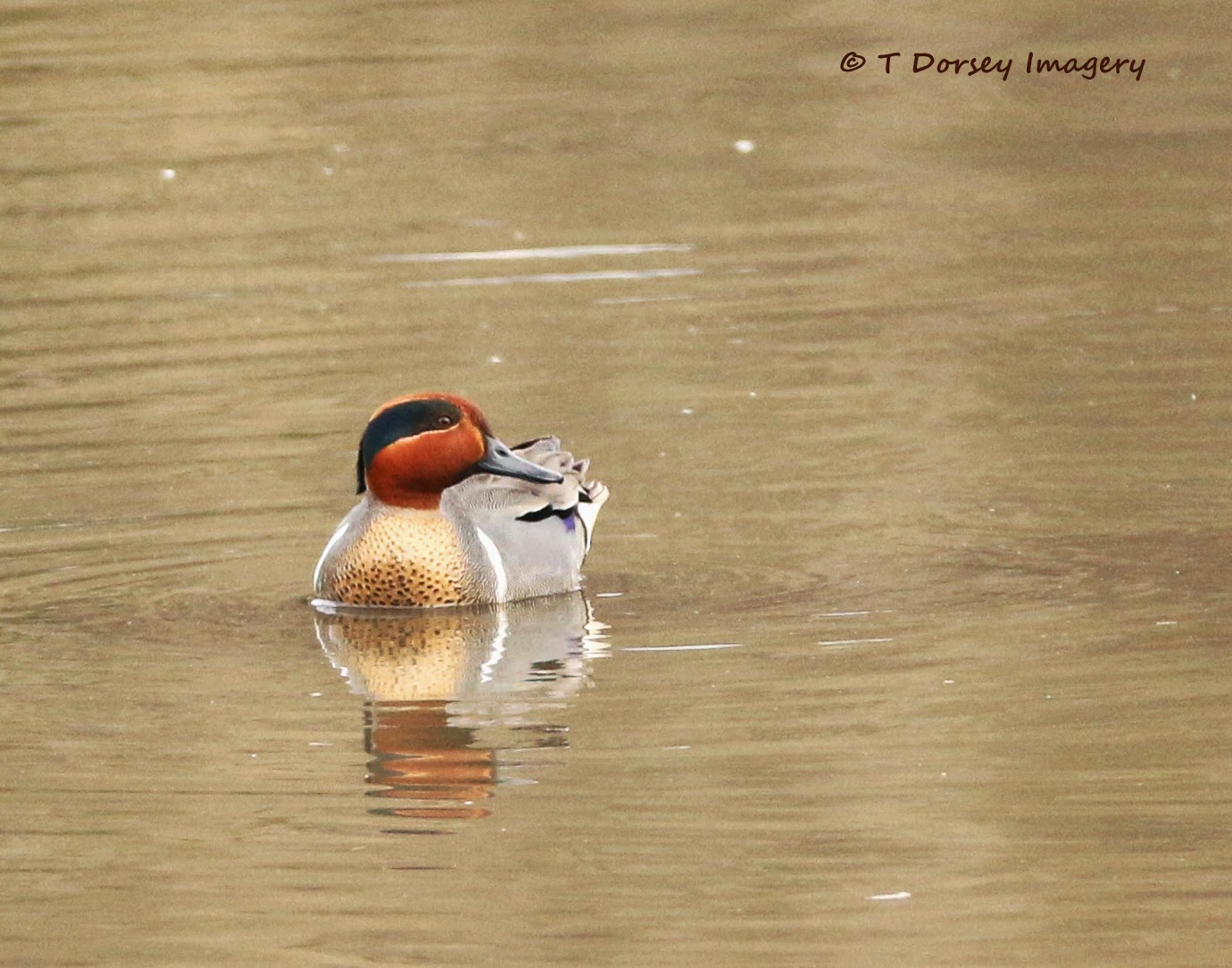
 The spring migration is always an exciting time for us as we try to locate and photograph a new species of ducks.  Here is a Green Winged Teal that posed nicely but wasn't too keen about letting us get close so we took what we could get.


 Spring is an exciting time if you happen to be a big bold Gobbler.  Photographing them when they are all fanned out is like winning the lottery.  Well, almost like winning the lottery.
 

 Walk along any waterway on a sunny day in the winter and you will be treated to mother natures jewelry box.

 It doesn't always have to be dark to capture interesting shots of the moon.  This image required some significant underexposing to bring out the lunar detail.

 On this day I was watching for Eagles along the river when this family of deer stepped out of the woods and seemed to be checking out the thick slabs of ice that lined the banks of the Clarion.
 

 In this image it appears as though the American Coot and the Redhead Duck were engaged in a pretty serious conversation.
 
 We watched for hours as the American Coots would dive to the bottom and bring up a rock covered with Zebra Mussels.  Apparently they were quite tasty because they would clean off one rock and then dive down and bring up another.
 
 Lots of different ducks.

 Canvasback, Redhead and Scaups.
 
 Canvasbacks are often confused with Redheads but truthfully they are quite different.
 

 Three young Amish or Mennonite decide to call it a day after a long day out on the ice.


 The images above are of a Longtail Duck also known as an Old Squaw.
 
 Another fun activity on the ice.
 
In the image below it appears that the two male Redheads are competing for the female Redhead.